


















What does a startup get from our product design retainer?
Our product design retainer gives you a senior design and development team for $6,000 a month: we design new features and flows, fix the UX that costs you users, and build everything we design. It replaces the usual chain of a designer handing Figma to an engineer who then guesses at the details. Mehdi Hassan leads every engagement.
Work | Examples | Output |
|---|---|---|
Product UX | Onboarding, activation, settings, billing and permissions flows | Flows and screens in Figma |
Interface design | Dashboards, tables, forms, empty, loading and error states | Component-level designs |
Design system | Tokens, components and patterns that match the code | Figma library and coded components |
Front-end build | The screens we design, implemented in your stack | Pull requests your team can review |
Customer research | Joining customer calls and reviewing session data | A ranked list of what to fix next |
Marketing pages | Feature launches, pricing and changelog pages | Designed and built pages |
If you want to test the fit first, the $1,000 trial week is one week of design and development on a real problem from your backlog.
How is product design different when the same team writes the code?
When the designer also builds, the design covers the states real users hit: the empty dashboard, the slow request, the failed payment, the permission someone doesn't have. Handoff gaps are where most product UX quietly breaks, because nobody owns the details between the mockup and the merge. We own both sides, so the shipped screen matches the design.
It also changes the advice. A designer who codes knows when a custom component is worth the effort and when an existing library will do. For most startups we start from shadcn/ui and your current components, then build a custom system only when the team grows. Practitioners commonly cite two or more designers or three or more engineers as the point where a custom system pays off. Our guide to shadcn/ui vs a custom design system explains the trade-off, and what to expect from a product designer who codes covers the first week.
How do we work as your startup's UI/UX team?
Free intro call
Thirty minutes on your product, your users, the metric you care about and what's stuck. We say whether a retainer is the right fit.
Optional trial week
For $1,000 we spend one week on a real problem, so you see how we design, build and communicate before committing.
Listen first
We join customer calls, review session recordings and support tickets, and walk the product as a new user would.
Agree priorities
We turn what we find into a ranked list with you. You decide the order; we tell you what each item will take.
Design
Flows and screens in Figma, including edge cases and states, reviewed with you and your engineers.
Build
We implement the approved design in your codebase, or alongside your engineers, and check it against the design.
Review and repeat
We look at how the change performs and what customers say, then move to the next item.
Which product UX problems do we fix most often?
Most startups come to us with one of a handful of problems, and nearly all of them show up as users who sign up and never come back. The fix is usually clarity, not more features.
- Onboarding that doesn't activate. We design toward one clear value event, with empty states that teach by doing, instead of tours and tooltip chains.
- Dashboards nobody reads. We cut to the numbers people act on and design tables, filters and drill-downs that hold up with real data.
- AI features users don't trust. The patterns that hold up are visible plans, approvals and logs, undo, citations, distinct loading states and honest uncertainty. Our guide to AI dashboard design shows them in practice.
- A vibe-coded app that's hit its limits. If a Lovable or Bolt prototype got you to first users, we can redesign and rebuild it properly. See rescuing a vibe-coded app.
- Inconsistent UI. Five button styles and three spacing systems. We consolidate them into tokens and components that match the code.
Hypothetical example: what one retainer month can look like
For example, suppose a seed-stage analytics startup sees most new accounts stall before connecting a data source. In the first week we join three customer calls and walk the signup flow as a new user. We find that the connection step asks for credentials before showing any value.
Over the next weeks we design a sample-data path so users see a working dashboard first, redesign the empty states around one next action, and build both in the product's Next.js front end. This is an illustration of how the work flows, not a real client result.
How much does UI/UX design cost for a startup?
UI/UX design for a startup costs anything from an hourly freelancer to a six-figure in-house hire, and the right option depends on how much ongoing work you have. These are typical ranges we see quoted in 2026; they vary by market and seniority.
Option | Typical quoted cost | What to expect |
|---|---|---|
In-house product designer | $90,000 to $150,000+ a year, fully loaded | About 2 to 3 months to hire; design only |
US freelance designer | $80 to $180 an hour | Good for defined tasks; you manage the handoff |
Design retainers | $2,000 to $12,000 a month | Scope and seniority vary widely |
UX audit | $1,500 to $25,000 | A findings report, rarely the fixes |
Design system build | $15,000 to $150,000 | Components and documentation |
Designify retainer | $6,000 a month, flat | Design and development, customer calls included |
The comparison that matters is total cost to shipped work. A designer whose screens wait weeks for engineering time costs more than the salary suggests.
Who is this product design service for?
It suits seed to Series B startups with a live product, real users and more design work than one founder can handle, but not yet enough to justify a full in-house design team. It works especially well when engineering is the bottleneck, because we take on the front-end build too.
- A good fit: a SaaS, fintech or AI product with users, a backlog of UX problems and a team that wants changes shipped, not just designed.
- A good fit: founders who want designers in customer conversations, not working from a ticket.
- Not a fit: you need a large team for a big enterprise program, or months of formal research before any design. A larger agency is built for that.
- Not a fit: you have one small, defined task. A freelancer, or our $3,000 brand and design sprint with its 10 website and product explorations, may cover it.
Still pre-product? Our MVP design service starts from zero. Selling B2B software specifically? See our page on B2B SaaS design.
Which product interfaces have we designed?
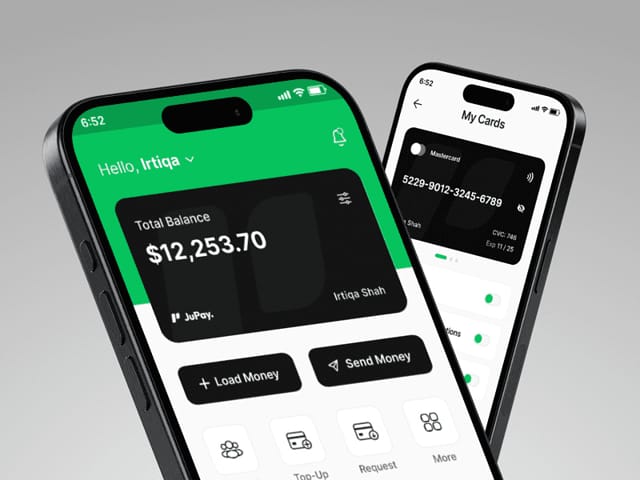
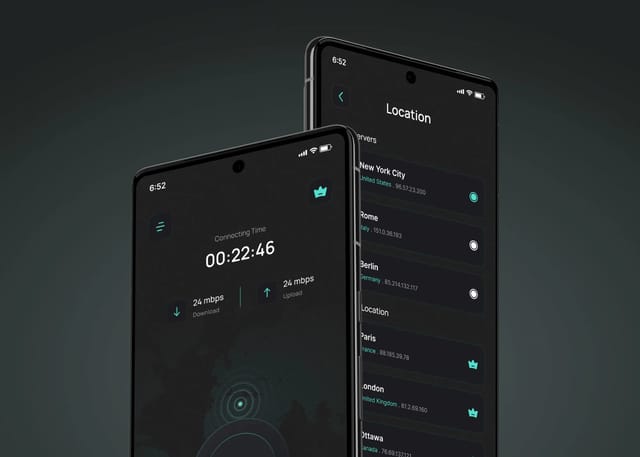
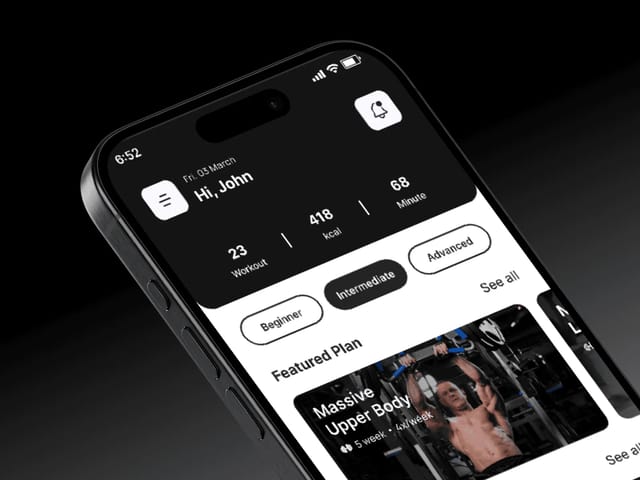
For JuPay, we designed a fintech mobile app covering money transfers, card management and cross-border payments, where clarity around money movement was the whole job. For Wirefox VPN, we created the brand identity and designed a mobile app built around security and peace of mind. We also designed PowerPulse, a workout app built around tailored routines.
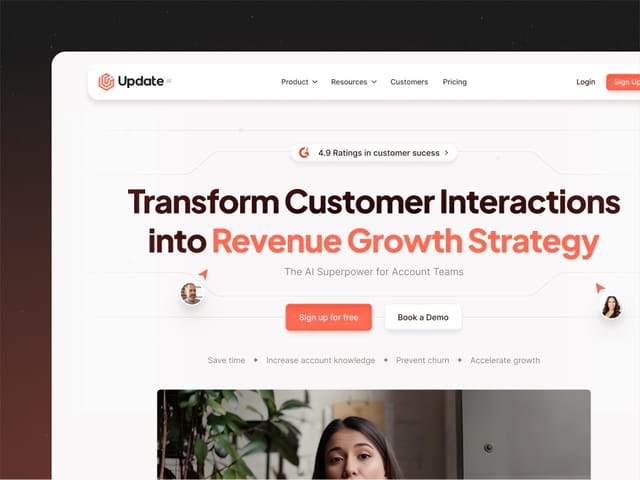
For Update.ai, an AI customer-intelligence platform for Customer Success teams, we handled website strategy, UI/UX and custom product storytelling, which meant explaining a complex AI product in plain terms.
What happens on the intro call?
The free 30-minute call is about your product, not our pitch. Bring the metric you're worried about and, ideally, a screen-share of the flow you suspect is broken. We'll tell you what we'd look at first, whether the $6,000 retainer or a $1,000 trial week makes more sense, and when we're not the right team.