



















What's the difference between Webstacks and Designify?
Webstacks is a B2B web agency that describes its focus as composable websites for tech companies: design, engineering and SEO on stacks that combine a headless CMS, a front-end framework and a separate host. Designify is a small studio where one team writes the copy, designs the pages and builds them, mostly for startups between seed and Series B.
Both build B2B sites, so the overlap is real. The difference is the shape of the client. A composable agency fits a company with a marketing team, several stakeholders and a site that already carries a lot of pages and traffic. A startup studio fits a company that's still sharpening what it says and needs a site that sells the product without a long programme around it. Our guide to choosing a SaaS website agency covers the questions to ask either one.
How do Webstacks and Designify compare side by side?
Webstacks' pricing isn't in our research, so the table describes their model and leaves out numbers. Treat it as a summary of how they present themselves as of 2026, and check their site for current services and pricing.
Webstacks | Designify | |
|---|---|---|
Model | B2B web agency, project and ongoing website team | Studio: fixed-price projects or a monthly retainer |
Typical client | Growth-stage and enterprise B2B tech | Seed to Series B startups |
Published price | Not in our research; check their site | $6,000 landing page, $8,000 website, $6,000/mo retainer |
Tech approach | Composable: headless CMS plus a modern front end | Next.js, Framer or Webflow, chosen per project |
Copywriting | Check their site for current scope | Included: we write first, then design |
Team | Agency team with separate disciplines | One small in-house team, words to code |
Way to test first | Check their site | $1,000 trial week |
Webstacks review: what is the agency known for?
Webstacks is known for B2B website work aimed at larger marketing teams. Its own site calls it a composable web agency, talks about redesigns, branding and ongoing website product teams for companies from Series A to IPO, and partner directories such as Sanity's list it as an agency for B2B tech companies. Its blog is a well-known source on B2B website strategy and redesign checklists.
Our research reads its content as enterprise-heavy: strong on process, governance and scale, lighter on what a ten-person startup should do first. That isn't a criticism. It's a signal about who the agency is built for. If your site has dozens of stakeholders, a content team publishing weekly and integrations with a marketing stack, that focus is an asset.
Do you need a composable website, or something simpler?
You need a composable stack when the site's content, teams and integrations have outgrown a single platform. You probably don't yet if one marketer edits the site and the main job is explaining a new product. Composable means separate pieces, such as a headless CMS, a front-end framework and a host, joined by APIs, so each can be swapped or scaled on its own.
Your situation | What usually fits | Why |
|---|---|---|
Pre-seed or seed, one product, a few pages | Framer or Webflow | Fast to edit, little to maintain |
Series A, content-led growth, custom features | Next.js with a headless CMS | Room to grow without a rebuild |
Many teams, locales and integrations | A composable stack | Each part scales and changes on its own |
Product-heavy site with app-like pages | Next.js | Shares code and components with the product |
We build all four, and we pick the platform with you rather than defaulting to one. Our pages on Next.js development and headless CMS development explain when the extra moving parts pay for themselves, and Webflow development covers the simpler route.
How does pricing compare between Webstacks and Designify?
We can't quote Webstacks' prices, because they aren't in our research. What we can give is context: typical ranges we see quoted for Webflow agency projects run from about $5,000 to $80,000 or more, and Next.js agency builds from about $20,000 to $120,000. Those ranges vary a lot with scope, and enterprise programmes usually sit at the upper end.
- Designify website, up to 6 pages, +$500 per extra page
- $8,000
- Designify landing page, copy to Next.js build
- $6,000
- Designify retainer, design and development
- $6,000/mo
- Trial week before you commit
- $1,000
Our prices are fixed and listed on our pricing section. If you're moving an existing site, migration work is scoped on the intro call, and we include redirects and SEO checks in any migration we take on. For a fuller breakdown of what drives B2B site budgets, see B2B website cost.
Who should pick Webstacks?
Pick Webstacks, or an agency built like it, if you're a scaling B2B company with a marketing team that ships pages every week, several internal stakeholders and a stack that needs a headless CMS, localization or deep marketing integrations. A team set up for ongoing website operations suits that load better than a small studio does.
Pros
- Built around B2B tech companies and their marketing stacks
- Composable builds suited to large, content-heavy sites
- An ongoing website team model for continuous work
- Process and governance that fit many stakeholders
Cons
- Pricing isn't in our research, so get a quote early
- Enterprise-style process can be more than an early startup needs
- A composable stack adds parts to maintain
- Check how much copywriting is in scope
Who should pick Designify?
Pick Designify if you're a startup whose site doesn't yet say clearly what the product does, and you want one small team to work out the words, design the pages and build them at a fixed price. That's most seed to Series B companies with a new product, a pivot or a site that a founder wrote two years ago.
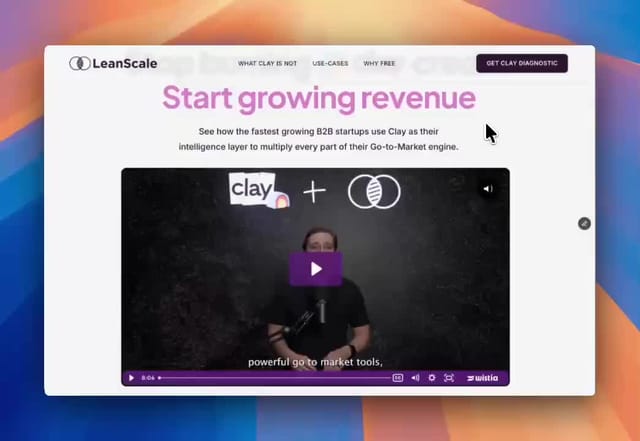
- The message is the problem. We start with positioning and copy, then design around it. For LeanScale that meant an education-first funnel built around one free diagnostic.
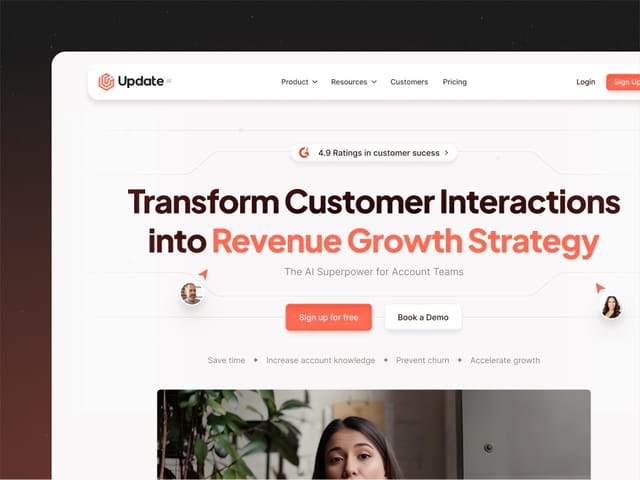
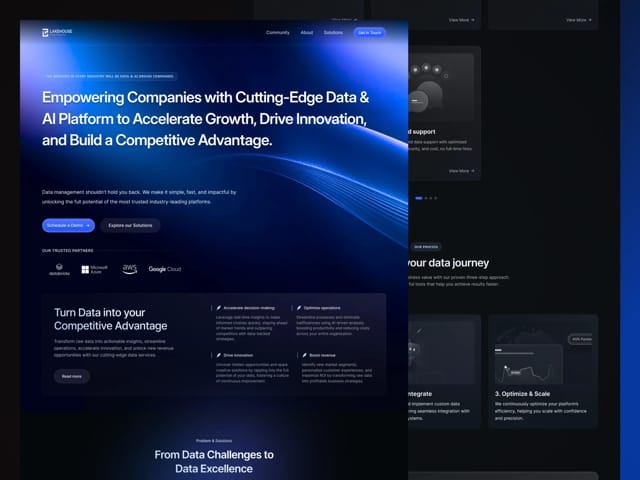
- The product is hard to explain. We designed and built Update.ai's site around real product visuals, and a multi-page site for Lakehouse Partners that turns complex data and AI services into a clear path for buyers.
- You want a known price. $8,000 for up to six pages, +$500 per extra page, with no hourly billing.
- You want to try before committing. The $1,000 trial week is a real week of design and development on your site.
We're not the right fit for a large enterprise site with many locales, a content team of ten and a long procurement process. An agency set up for that scale will serve you better.