



















Why would a New York startup hire a remote web design agency?
Most New York startups don't need their designer in the same building. They need a team that answers within the working day, joins calls on Eastern time, and can turn a dense product into a site a skeptical buyer understands. Designify is remote, and we say so upfront: no Manhattan office, no local address, just a small team that writes, designs and builds.
What you get instead of a local studio's overhead is a fixed price and one team from copy to code. Typical US agency rates we see quoted run about $80 to $180 an hour, and they vary by firm and scope. Our startup website package is $8,000, fixed.
How do we work with New York teams on Eastern time?
New York runs on Eastern time, UTC−5 in winter and UTC−4 from mid-March to early November. We agree a regular call slot inside your working day when we scope the project, and everything between calls happens in writing, so nobody waits on a meeting to make progress.
What | How it works for a New York team |
|---|---|
Live calls | A standing weekly call in your Eastern-time workday, plus reviews when a milestone lands |
Async updates | Written progress notes and recorded walkthroughs you can watch between meetings |
Feedback | Comments directly in Figma and on the staging site, collected into one list |
Customer calls | On the retainer, we join your customer and sales calls to hear objections first-hand |
London overlap | If part of your team sits in London, its afternoon is New York's morning, so one call can cover both |
Many New York companies also have a European office or customers there. Eastern time overlaps the London afternoon by several hours, so we usually book shared reviews in the New York morning. Read what to expect week to week for the full rhythm.
What do New York fintech and finance startups need from a website?
Finance buyers in New York read a site the way a compliance officer reads a contract: looking for what's missing. The site has to explain what the product does with money, who holds it, and which rules apply, before it sells anything. That shapes the copy, the page list and the footer.
- Accurate claims. Investment advisers fall under the SEC's marketing rule, and broker-dealer communications fall under FINRA's rules on communications with the public. Your counsel signs off on the words, and we write so they have less to cut.
- Licensing and partner-bank disclosures. Who the regulated entity is, in plain language, near the product claim, not only in the footer.
- Security and trust pages. Data handling, certifications you actually hold, and a named contact for security questions.
- Fee clarity. Pricing and fee tables that a CFO can check in under a minute.
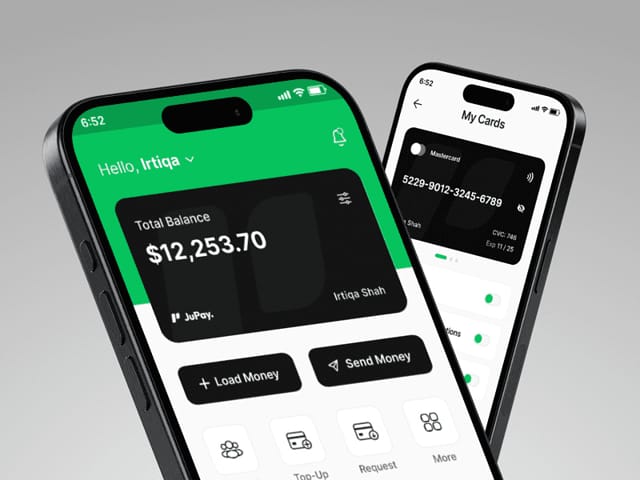
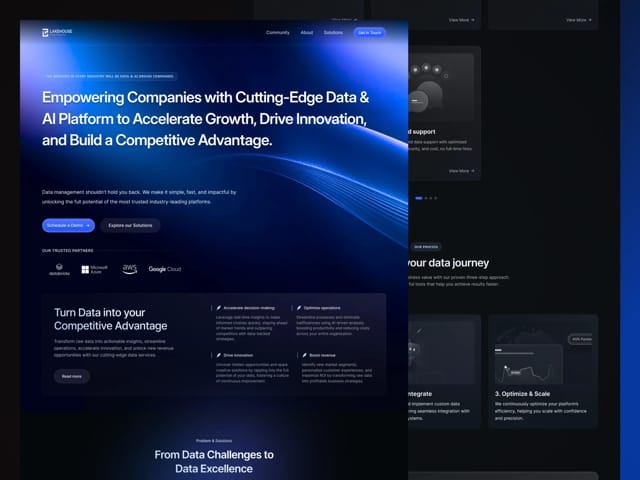
We've designed and built sites in this space, including Jupay in payments and Lakehouse Partners in accounting. Our payments industry page and the guide to fintech website compliance cover the details. We aren't lawyers, so treat this as the design side of compliance, not legal advice.
What do media and content startups need?
New York is also a media town, and content businesses have a different problem: the site is the product, or close to it. Speed, a CMS editors actually like, and templates that survive a hundred different articles matter more than a clever homepage animation.
- A CMS built around the editorial workflow. Drafts, scheduling, authors and categories, set up so editors publish without a developer.
- Templates, not pages. Article, author, topic and landing templates designed for the worst case: long headlines, no image, five embeds.
- Speed on real content. Image handling and page weight tested on heavy articles, not on the demo page.
- Structured data. Article and author markup so search engines and AI answers can attribute your work.
How should you sell to enterprise buyers on your site?
Plenty of New York startups sell to banks, insurers, agencies and large brands. Those buyers arrive late in a deal, after a referral or a demo, and use the site to check you're real and to answer their procurement team. The site's job is to make that check easy.
That usually means a clear use-case page per buyer, proof in the form of logos and named case studies you have permission to use, a security page procurement can forward, and a contact path that reaches a person. Our guides to B2B fintech websites and enterprise AI websites go deeper on what procurement teams look for.
How does our process work?
Free 30-minute call
On a time that suits Eastern time. We learn the product, the buyers and the deadline, and confirm which fixed-price offer fits.
Message and copy
We write the site first, so your team and counsel review the argument and the claims before any design.
Design
Custom design in Figma for desktop and mobile, reviewed in your workday with comments collected in one place.
Build and launch
We build in Next.js with a CMS and animation, connect forms and analytics, and launch. Timelines are scoped on the intro call.
How much does a website cost for a New York startup?
Our prices don't change by city. A website is $8,000 for up to 6 pages plus $500 per extra page, a landing page is $6,000, a brand and design sprint is $3,000, and the retainer is $6,000 a month. For comparison, typical ranges we see quoted for agency Next.js builds run about $20,000 to $120,000, and they vary widely by scope.
A hypothetical scope for a New York fintech
For example, suppose a seed-stage New York fintech selling to finance teams needs a homepage, product, security, pricing, about and a use-case page for CFOs. That's 6 pages, so it fits the $8,000 website. A separate partner-bank disclosures page would be a 7th page at $500. Copy is written first, so counsel reviews claims before design starts.
If you'd like to see how we work before committing, the trial week is $1,000. Otherwise, the next step is a free 30-minute call, and you can see every offer on our pricing section. For broader US benchmarks, read web design agency rates in the US.